Eternity. Diving in the depths of our universe of being ourselves in search of it. The greatest ambition of science, open or secret love of discovering it, madness in the arms of solid reality. Art, moving through the bosom of the universe of being to starry beyond in flames, as the everlasting breath dyes our spell of being in colours of feeling. Swaying of frames in the sea of melodies, the vibration of eternity on the mirror of words, the joy of cliff peaks on letting oneself go, in flames of intoxication.
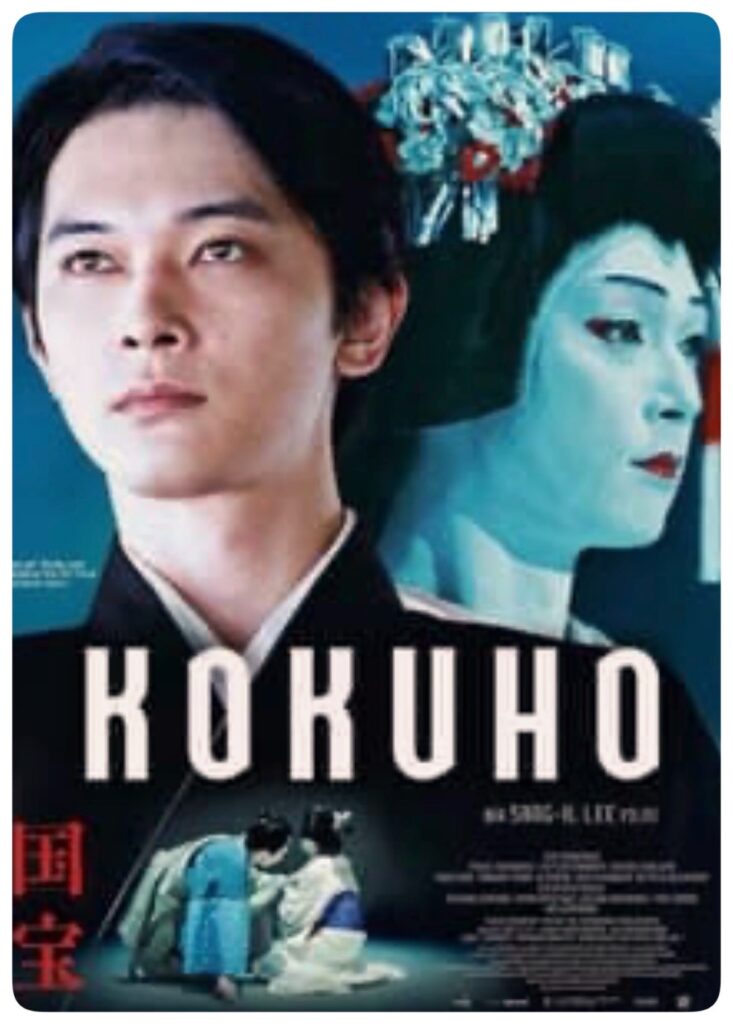
“Kokuho” presents us a universe of escape to eternity from the chains of rules, traditions where art is a battle of existence. The Japanese film made in 2025 is in a spell of flames which we do not want to leave with its length. Kokuho means living national treasure. The film directed by Lee Sang-il is adapted from the novel with the same name written by Shuichi Yoshida in 2018. In the leading roles we watch Ryo Yoshizawa, Ryusei Yokohama, Mitsuki Takahata, Shinobu Terajima, Min Tanaka and Ken Watanabe. It had its premier in 2025 Cannes Film Festival. It competed as the Japanese entry for Best International Feature Film and was also nominated for Best Makeup and Hairstyling at the Academy Awards.
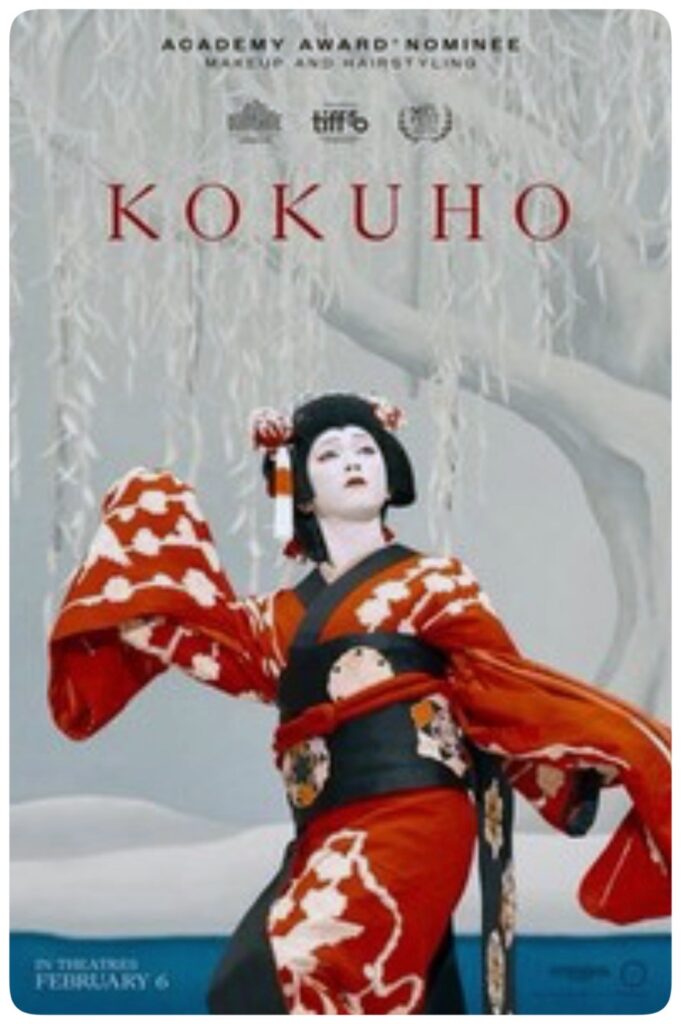
The film is important as it depicts Kabuki in detail. Kabuki is a Japanese theatre form that combines theatre with traditional dances. It is a sparkling theatre with spectacular, heavily ornamented costumes and special make-up. In 1629 an order consisting only of men started in Kabuki. Men act as women, they are called onnagata. They present an idealized womanhood with costumes, make-up mentioned above on stage. Kabuki was inscribed in the UNESCO Representative List of the Intangible Cultural Heritage of Humanity.
“Kokuho” presents us a universe of escape to eternity from the chains of rules, traditions where art is a battle of existence.
As the lights go off and we are alone with the silver screen magic, we are face to face with light brush strokes starting on the nape. Skillful hands prepare not only the artist, but also us for the stage with their touches. The hall is filled with a heavenly melody, we are in the flaming world of art now. They also say their lines impersonating women, a fully-equipped artistic start. A lively celebration outside the backstage. The new year celebration of a mafia group(yakuza) in which the famous Kabuki artist Hanai Hanjiro II is invited, goes on. Yakuza’s son is in the Kabuki performance, Hanjiro is deeply affected by Kikuo. The boy’s onnagata performance is amazing. The celebration is raided by an opposing mafia group and Kikuo’s father is killed. Pure white snow with flakes of eternity outside, crystal gloom snows in Kikuo’s heart from his eyes. He gets a tattoo of an eagle owl on his back. Harue, his girlfriend, is with him, too, as usual. An eagle owl is a symbol of gratitude. This tattoo will always bring him trouble, the reality that he is the son of a yakuza is always on his back. He tries to avenge his father’s killing but fails, thankfully.
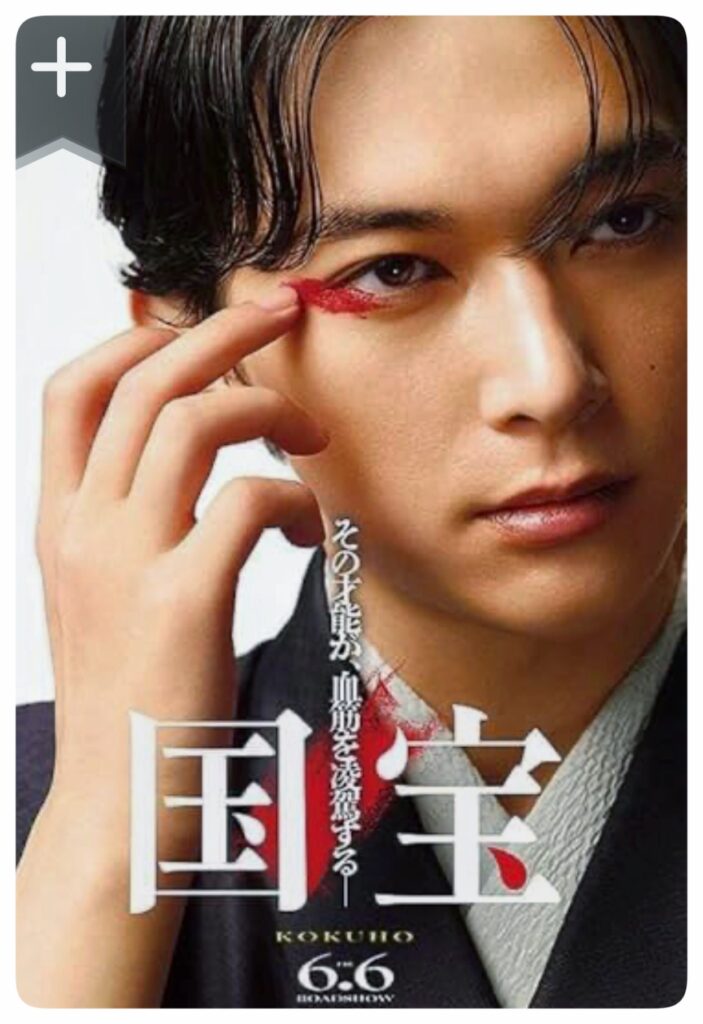
Hanjure takes Kikuo, although his wife does not want him, how could he forget the ore in him? Even though ancestry is the most important thing. Traditions surround people in all their steps, and breathe. Hanjure has a son the same age as Kikuo, Shunsuke. The uniqueness of artistic passion is an unbelievable spell in Kikuo. His determination of work also fills his spectators with a different kind of glow. Mangiku, a kokuho, opens great doors of inspiration to them with his wonderful performance. Kikuo is very handsome, Mangiku calls him, investigates his face, says that physical appearance should never forestall art. Two young men perform as two and they are very successful. The film shows us the whole performances, a brilliant meeting with Kabuki, scenes very much like documentaries. The long, nearly ceremonial preparations of the artists, their dressing the costumes one by one with great care, change of costumes on stage. Alive traditional Japanese music, plays with the same breath for thousands of years. They are always applauded madly, the excitement on the peak, with frames so real in our pupils. Then they break apart. Although Hanjiro relinquishes his title to Kikuo, he is excluded from Kabuki because of his ancestry. His private life is also in a mess, a relationship with a geisha, his daughter he barely sees, another relationship he has for practical reasons. He has to make do with the small parts he can find. Some men think that he is a woman, he is terribly beaten. He climbs the rooftop, drinks his sorrow, intoxicated also with his never-extinguished art joy, dances with laughs, cherishing himself with his sadness.
Art, moving through the bosom of the universe of being to starry beyond in flames, as the everlasting breath dyes our spell of being in colours of feeling. Swaying of frames in the sea of melodies, the vibration of eternity on the mirror of words, the joy of cliff peaks on letting oneself go, in flames of intoxication.
His never leaving the path of art opens new doors for Kikuo. Manguki, who is over ninety now, calls him and wants him to dance for him. They come together with Shunsuke, he supports Shunsuke when he is ill. His last wish, an amazing performance with Kikuo’s endeavor. Now Kikuo is a sun echoing never-extinguished heartbeats with its beams on the sky of art. He becomes Kokuho sixteen years later, very young for this title. We see him as he performs “Sagi Musume”, “Heron Maiden”. One of the most difficult dances of Kabuki takes place in this play. It tells us the tragic end for love of a heron that takes the shape of a human. All alone, on stage, he looks at the lights. The notes that are reflected to our ends, the combination of traditional Japanese music with modern melodies, the intoxication of the sea. It is as if it is snowing as it was on his first performance. He is in tears, we are also carried away in front of the silver screen together with him, the music echoed from the skies, with his dance, his looks, we are in the world whose doors he has opened for us, in a dark hall, alone with Kikuo. We are full of thanks for this beauty, this spell. What he looks for is a scene. That scene is in us now, where our tears touch.
The film confronts us with the matters of what an artist can do for her/his art, what she/he can endure and give up. In a scene, Kikuo says he has made a deal with Satan, just like Faustus. After he becomes kokuho, a journalist approaches him on an interview. This is her daughter Ayano, who he has not seen for years. She says that she does not see him as his father, but Kikuo’s art light has got hold of her, what a blessed hold it is, soaring to an unknown world. The light of this hold is reflected in her eyes as she speaks to her father, enclosing our being, the spell of art with flames of cinema blossoms in us. On the last frames of the film, we remember Jim Morrison’s being carried away on stage. Kikuo presents his core with each touch on stage even though he is nourished by tradition. British artist Joseph Turner’s yearning for catching the sun, being with the sun, drawing at sunrise. His getting himself tied on the mass of the ship on a storm to be able to draw the storm, his great touches on canvas at the cost of his life. As Ocean Vuong named his book, “on earth we’re briefly gorgeous”, maybe on the spark of art in us. The artist Vuong mentions in the same book, who goes out at a storm to find the right tinge of green and never comes back. The uniqueness of sunset, the being that finds itself in art, like the artist’s production with her/his flame by being intoxicated. “Because the sunset, like survival, exists only on the verge of its own disappearing.”